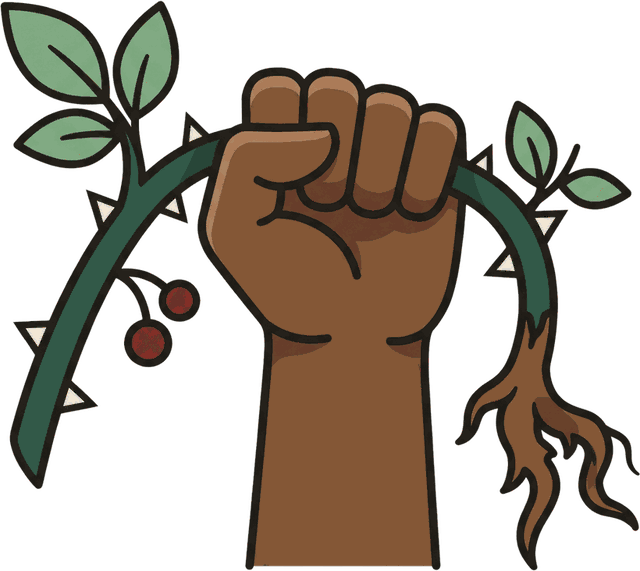
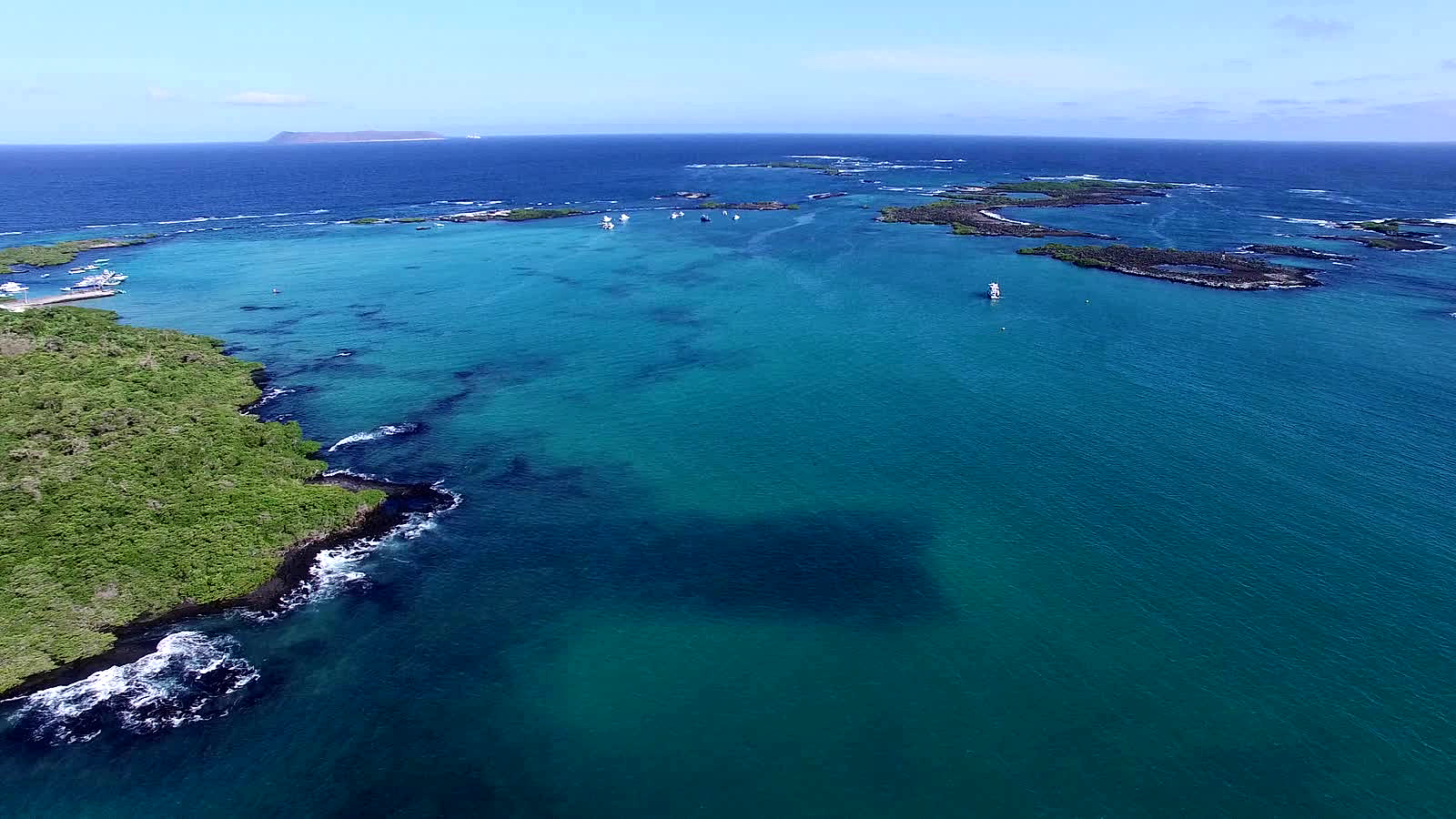
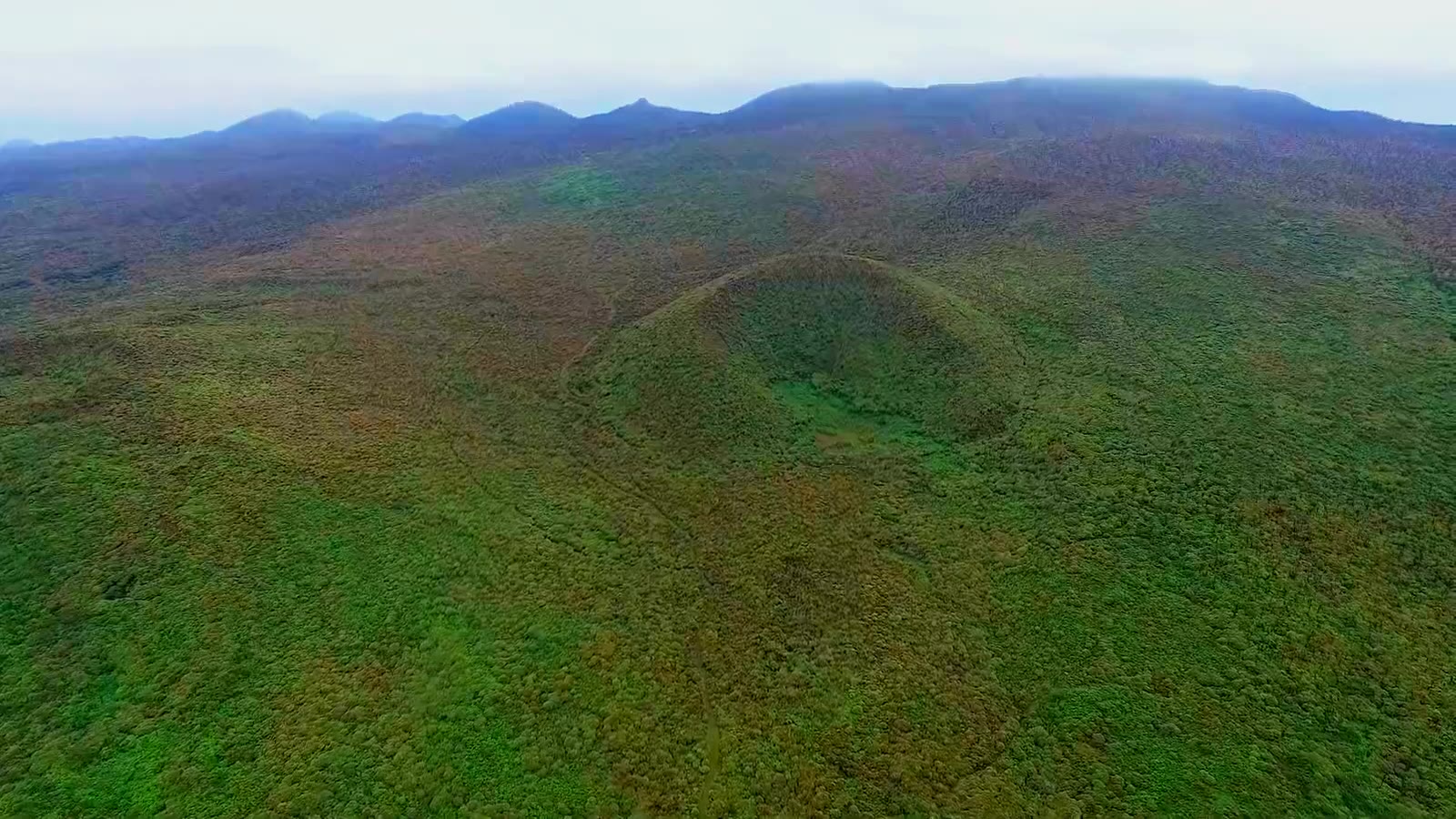
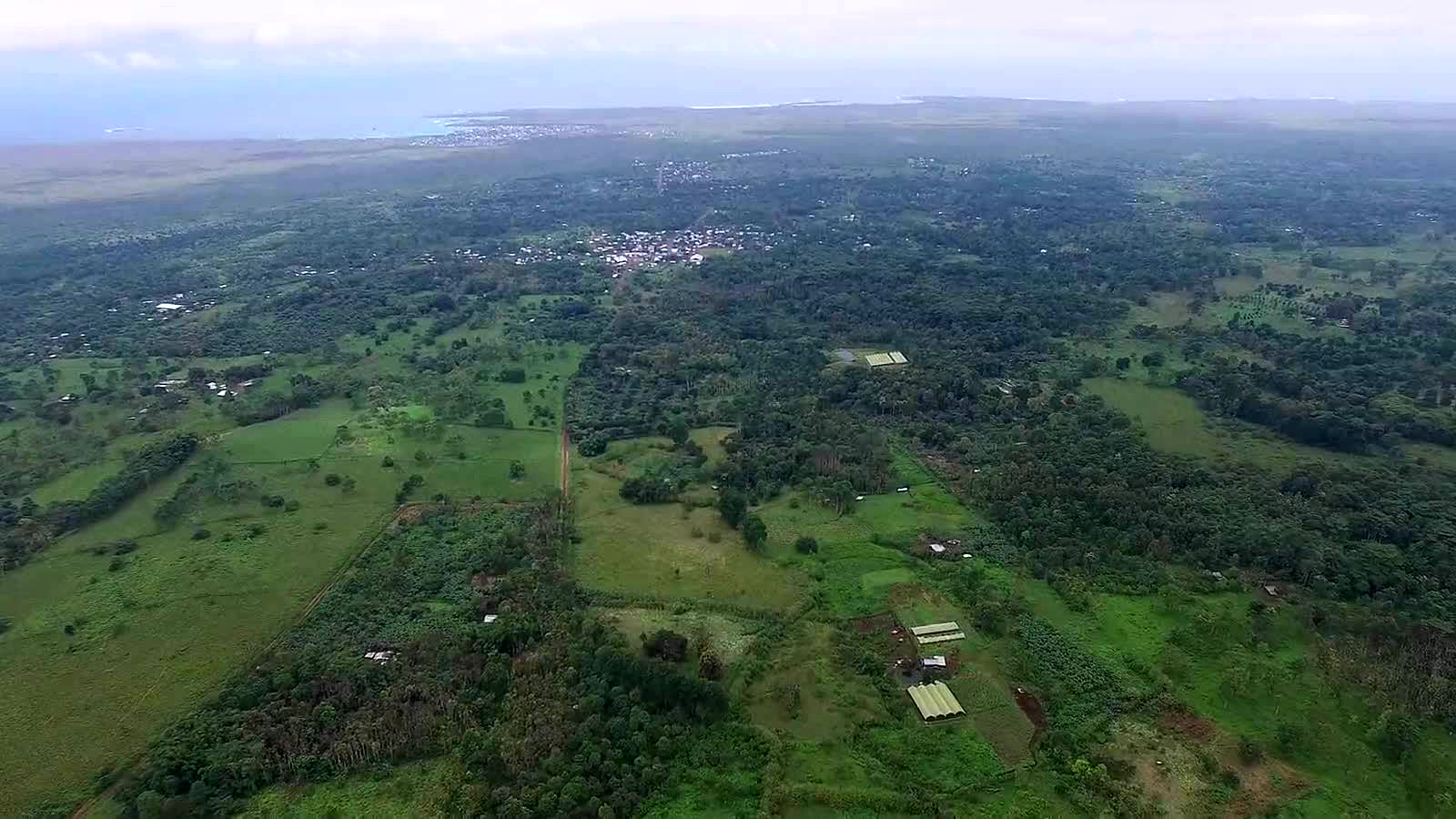
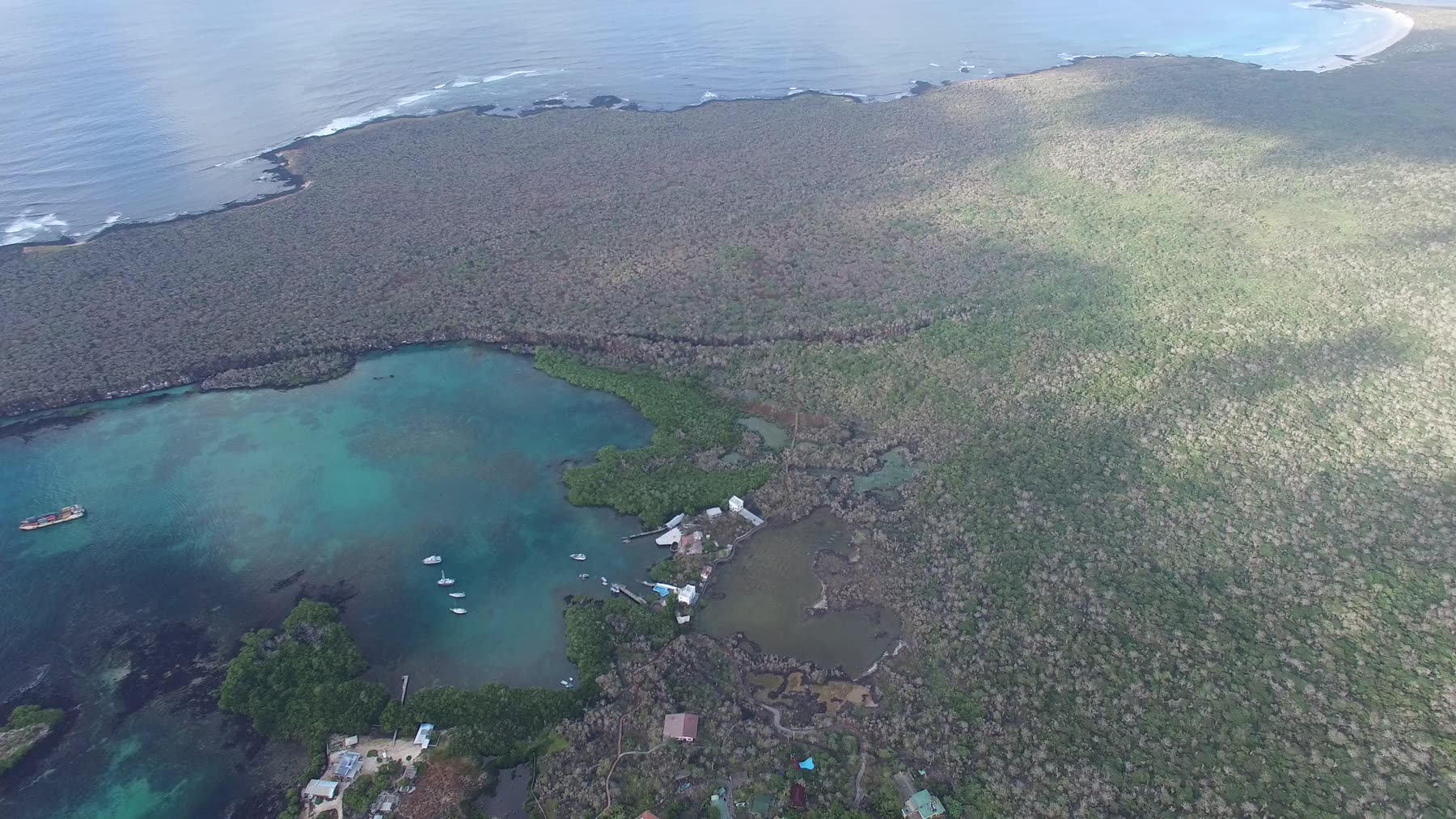
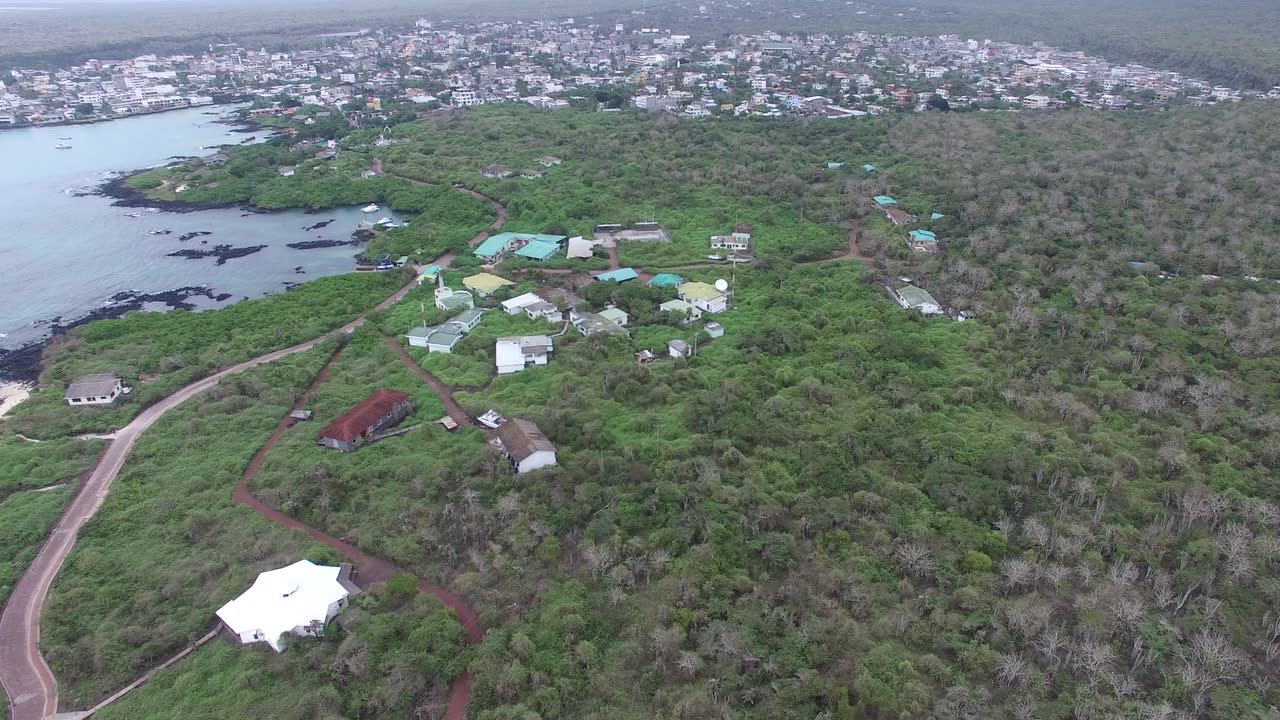
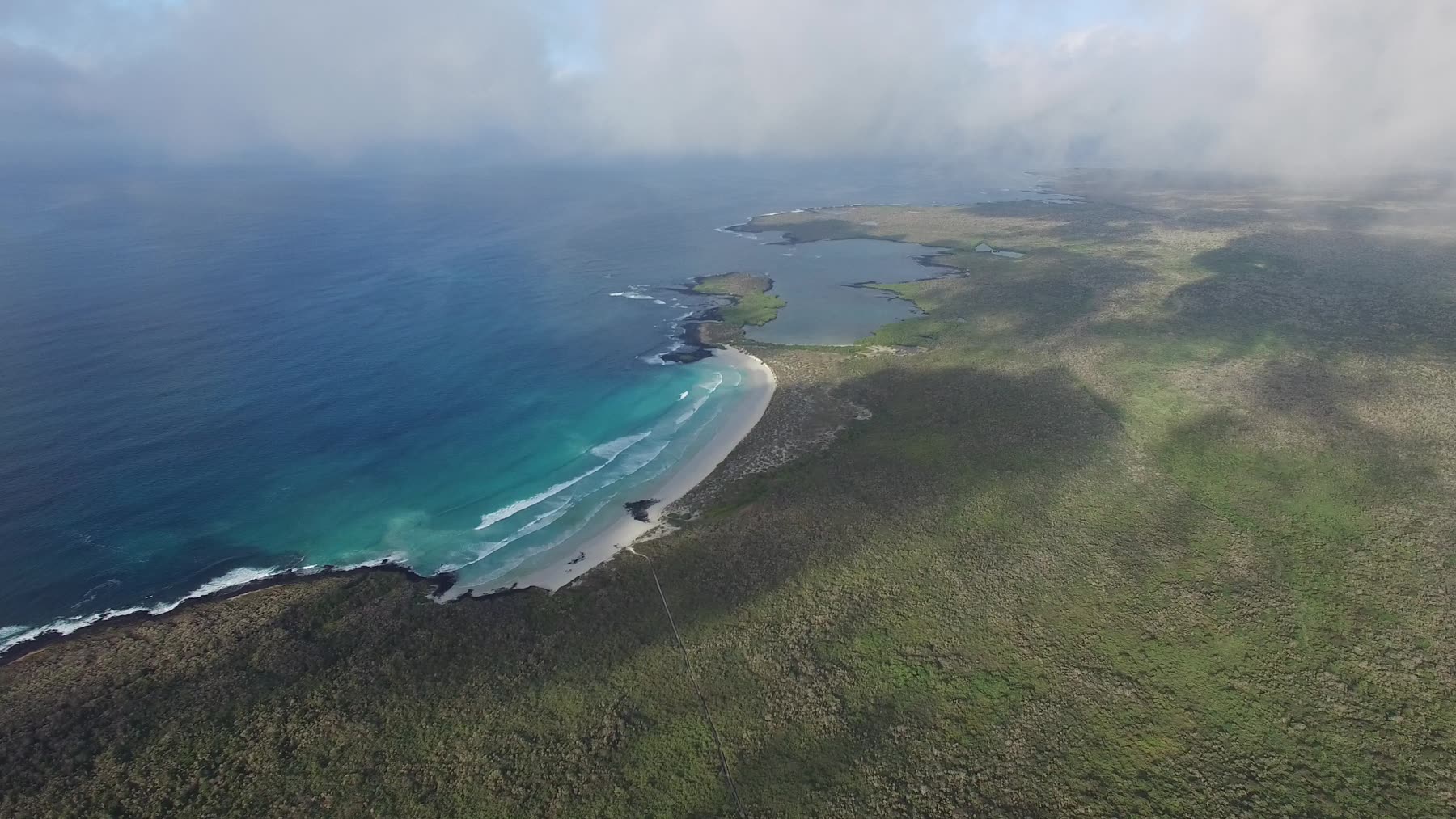
While the world watches the marine reserve, the highlands are being quietly smothered — the endemic Scalesia forest replaced by a wall of thorns.
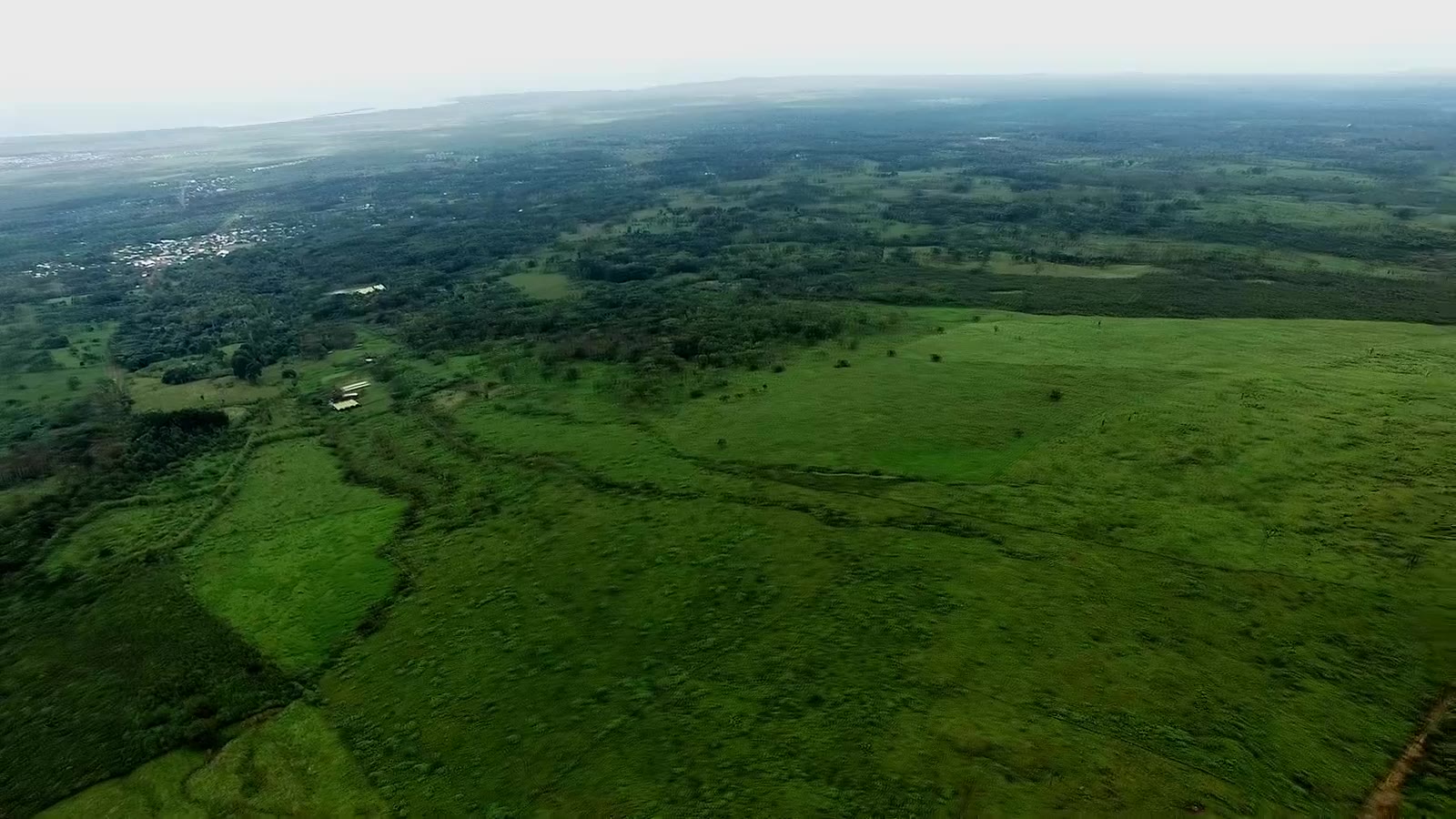
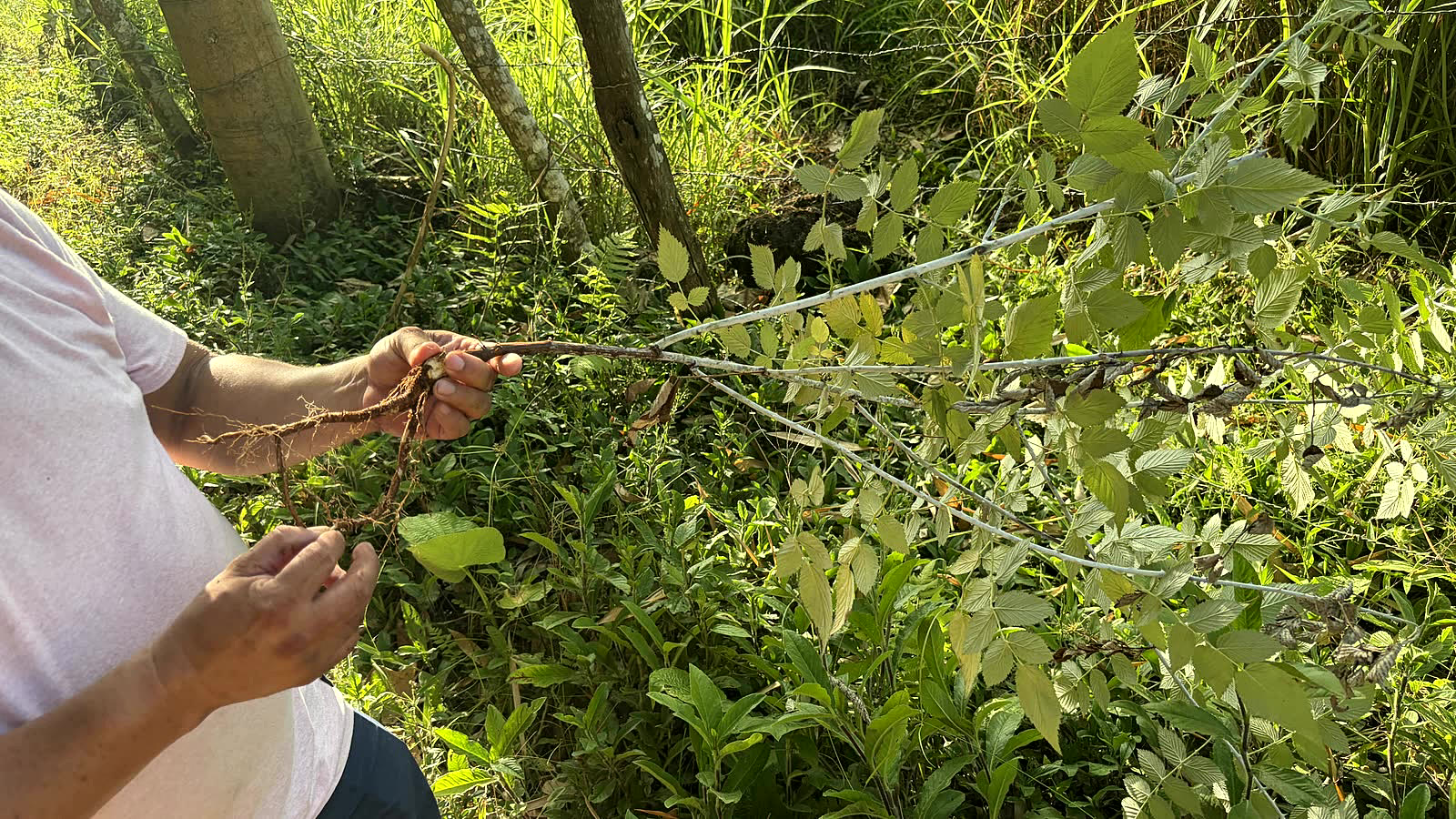
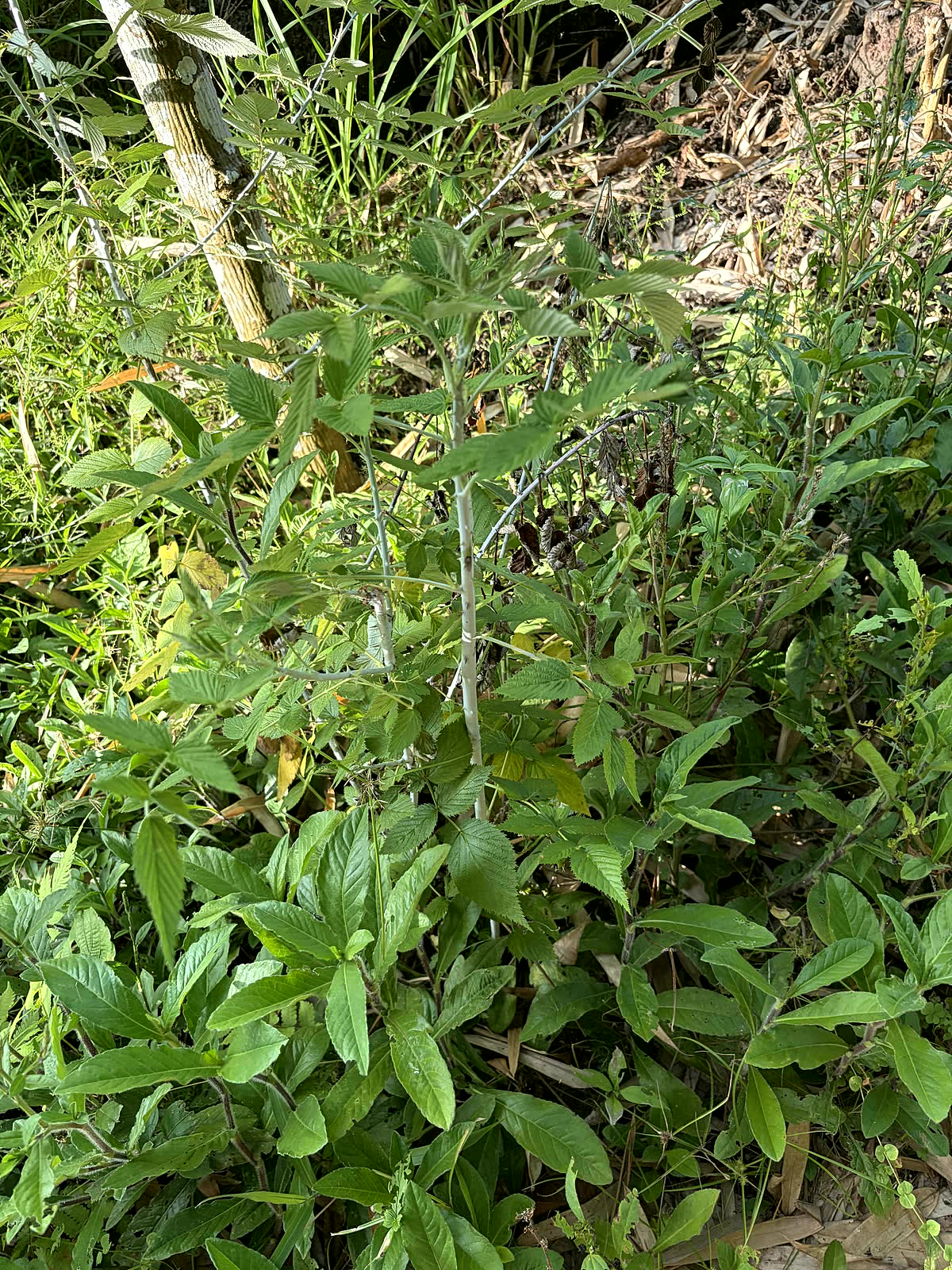
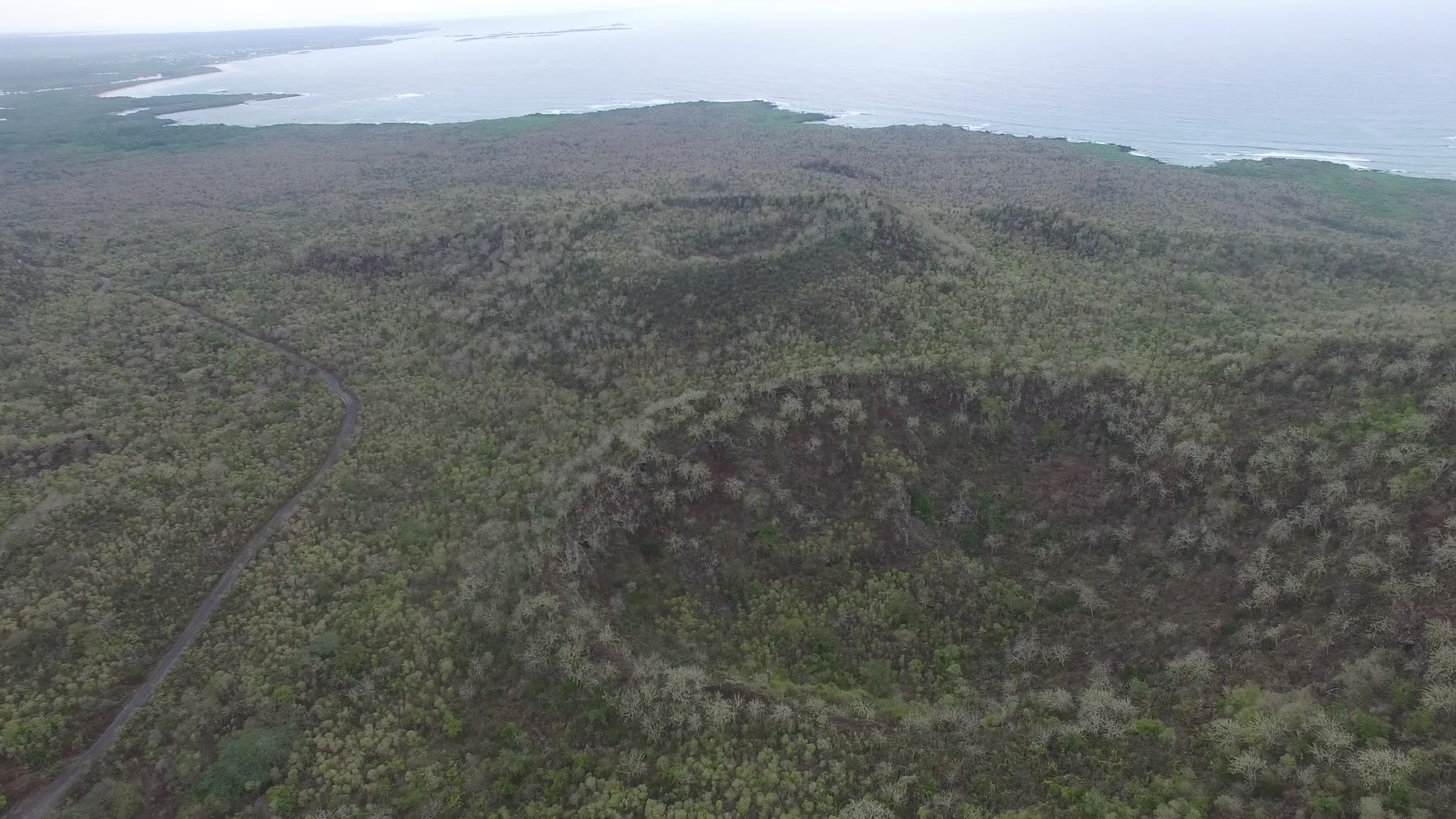
Rubus niveus — hill blackberry, introduced in 1968 — now stands across more than 30,000 hectares of highland (see what that looks like →) in thickets four metres high. What it replaces is a forest that exists nowhere else: Scalesia pedunculata, a daisy that became a tree. Our seal is a Scalesia leaf. It is not decoration — it is the thing we are trying to put back.
Where blackberry stands, Scalesia does not regenerate at all. Not slowly — not at all: mature trees die and nothing replaces them, and on the present trajectory the species could reach quasi-extinction within about twenty years (Riegl et al., 2023). Removal works. It only works if it is sustained.1
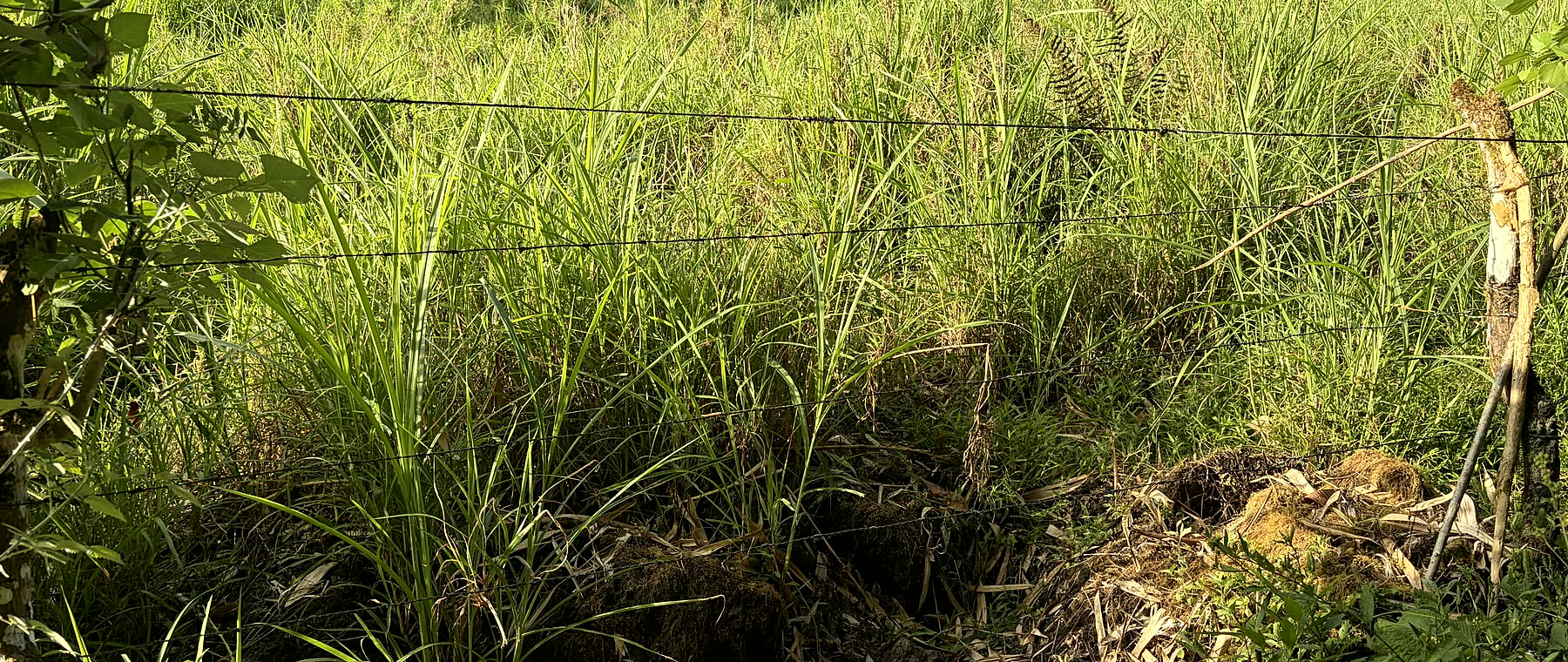
The forest is not the only casualty. The Western Santa Cruz Giant Tortoise, Chelonoidis porteri, is Critically Endangered — around 3,400 animals remain2. Every year they migrate between highland nesting grounds and the arid lowlands, a route their ancestors have walked for millennia. Blackberry now walls those corridors and degrades the nesting ground at the end of them. An animal that has crossed these islands since before human memory finds its oldest paths closed.
Guava, quinine tree and Lantana compound the damage. Over 870 introduced plant species now stand against fewer than 600 natives — many already threatened. This is the problem GHRI was created to address.
Sources for this section
- Riegl, B., Walentowitz, A., Sevilla, C., Chango, R. & Jäger, H. (2023). Invasive blackberry outcompetes the endemic Galapagos tree daisy Scalesia pedunculata. Ecological Applications 33(4): e2846. doi:10.1002/eap.2846 ↩
- IUCN Red List — Western Santa Cruz Giant Tortoise (Chelonoidis porteri), Critically Endangered; population estimated at 3,400 (Cayot et al., 2017). ↩